US Supreme Court Clears Path for Trump’s DOJ to Drop Case Against Steve Bannon — What It Means
US Supreme Court Clears Path for Trump’s DOJ to Drop Case Against Steve Bannon — What It Means
 _noor e haram
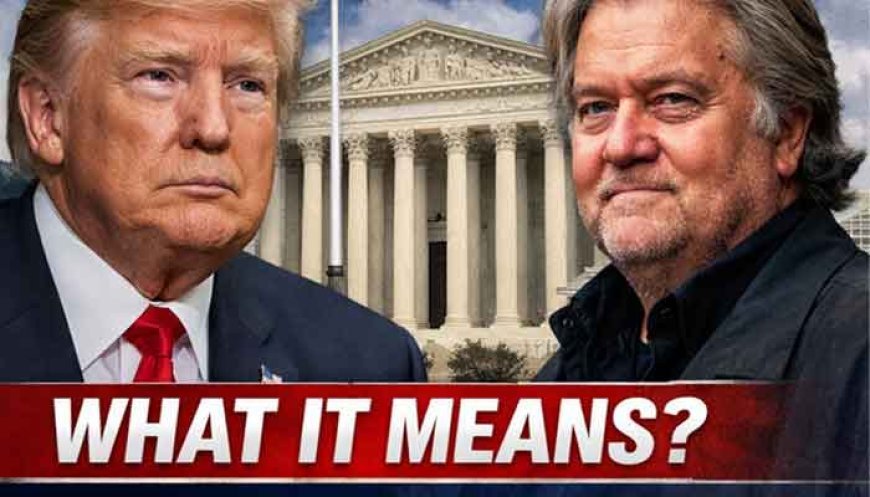
In a development that’s stirring intense debate across the United States, the Supreme Court has cleared the way for the Department of Justice under Donald Trump to potentially dismiss a criminal case against his longtime ally, Steve Bannon. The decision has quickly become one of the most talked-about political and legal topics in the country.
At the heart of the issue is a broader question: how much influence should a sitting administration have over ongoing legal proceedings—especially those involving close associates?
Background of the Case
Steve Bannon, a prominent figure in Trump-era politics and former White House strategist, has faced multiple legal challenges in recent years. One of the key cases against him involved allegations tied to his political and financial activities. While the details of the charges have been widely discussed in media and courtrooms, the case symbolized something bigger—accountability at the highest levels of power.
However, with the Supreme Court’s recent move, the legal path has shifted. The ruling doesn’t directly dismiss the case but removes barriers that previously limited the Justice Department’s ability to do so.
Why This Matters
This development raises serious questions about the independence of the justice system. Critics argue that allowing the Department of Justice to drop a case involving a close political ally risks setting a dangerous precedent. They worry it could blur the line between law enforcement and political loyalty.
Supporters, on the other hand, see it differently. They argue that the executive branch has always had discretion in legal matters and that the Justice Department must have the flexibility to reassess cases based on evolving circumstances.
Political Reactions
Unsurprisingly, reactions have been sharply divided. Political opponents of Donald Trump have labeled the move as an abuse of power, suggesting it undermines the rule of law. Meanwhile, Trump’s supporters view it as a correction of what they consider politically motivated prosecutions.
Legal experts are also split. Some emphasize that the Supreme Court’s role is to interpret the law—not the political consequences—while others warn that decisions like this can have long-term implications for public trust in institutions.
The Bigger Picture
This case is not just about Steve Bannon. It reflects a larger tension in American democracy: balancing executive authority with judicial independence. The outcome could influence how future administrations handle legal cases involving political figures.
It also highlights how deeply polarized the American political landscape has become. Almost every major legal decision now carries political weight, making it harder for institutions to appear neutral in the eyes of the public.
What Comes Next
The ball is now effectively in the Department of Justice’s court. Whether or not it chooses to dismiss the case against Steve Bannon will likely shape both legal and political narratives in the months ahead.
One thing is certain: this story is far from over. As new developments emerge, it will continue to fuel debate—not just in the United States, but around the world—about power, justice, and accountability.